Most custom sock projects start with a logo. Where the logo lives, how it's applied, and how it ages are decisions that affect cost, perceived quality, and how the sock looks two years and forty washes from now. There are three main techniques. Each has a different look, durability, and price profile.
This guide walks through all three - what they are, when to use them, and how they compare on the dimensions that matter for B2B sock projects.
Knit (jacquard)
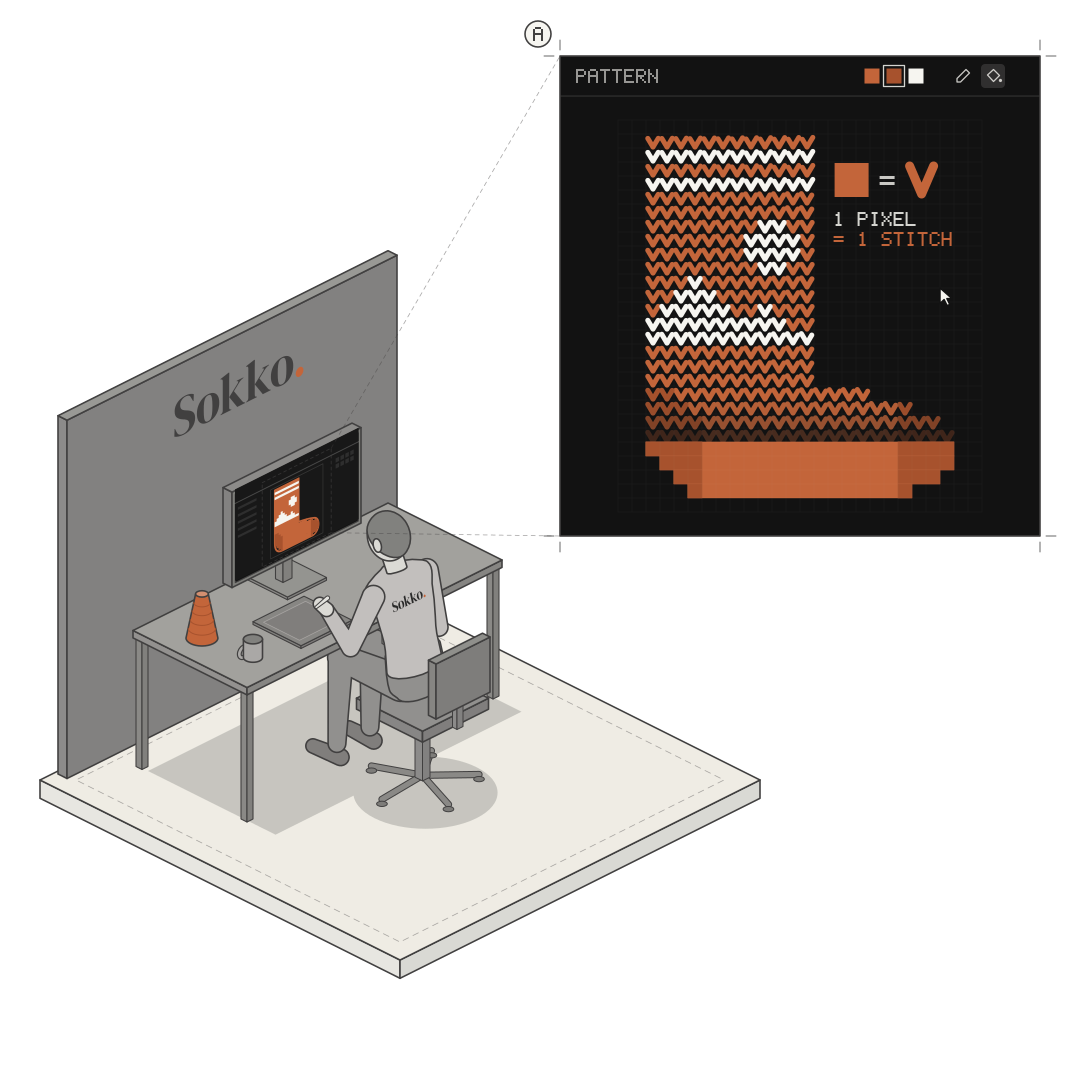
Jacquard knitting builds the design directly into the sock fabric. Different colored yarns alternate during the knitting process to form the pattern - the logo is part of the sock, not applied on top of it. The result looks like the design "belongs" in the fabric because it does.
How it works
The knitting machine is programmed with a digital pattern file that tells it which yarn to feed into which stitch. As the sock is knit, the machine swaps yarn colors to form the design. Setup is more involved (programming and color verification take time), but once running, every pair is produced with the design integrated.
Look and feel
Most premium of the three options. Slightly textural - you can feel the difference in yarn density where colors change. Reads as deliberate, considered, and durable.
Durability
The most durable option by a clear margin. The design can't peel, crack, or wash off because it's part of the fabric. A well-made knit logo will outlast the sock itself.
Cost
The most cost-effective of the three. Because the design is formed during knitting, there's no separate application step to pay for, so within its color range jacquard is the cheapest way to brand a sock. It's the rare case where the most durable, most premium-feeling option is also the most affordable.
Best for
Clean designs of 2 to 8 colors, premium-feeling brand work, retail products where durability matters, fashion socks, and any project where the brand wants the design to feel intentional. Not great for very fine detail (small text, hairline lines) - those read better as embroidery or print.
Embroidery
Embroidery applies the design to the sock as raised thread, sewn onto the fabric after knitting. Each design is a small embroidered patch (usually integrated, not appliquéd) that sits on top of the sock surface - most commonly at the cuff, ankle, or down the side.
How it works
After the sock is knit, it's loaded onto an embroidery frame and a multi-needle embroidery machine stitches the design using polyester or rayon thread. The thread sits proud of the fabric, creating a tactile, three-dimensional logo.
Look and feel
Distinctly raised and tactile - the embroidered area feels different from the rest of the sock. Reads as premium for small placements (a brand mark at the cuff) but can look heavy or out of place if applied to large areas.
Durability
Durable but not as integrated as knit. The thread can fray over many wash cycles, especially at the edges of the design. Well-made embroidery on a quality sock typically lasts 50+ washes without visible degradation.
Cost
More expensive than jacquard. Embroidery is a separate process after knitting: each sock is loaded onto a multi-needle machine and stitched, which adds machine time and thread cost on top of the sock. You choose it for the detail and the tactile finish, not to save money.
Best for
Small high-detail logos, monograms, signature marks, secondary brand elements (sponsor logos, edition numbers), and anywhere you want a textural premium feel in a small placement. Not ideal for large designs covering most of the sock - embroidery at that scale becomes heavy and sometimes scratchy against the skin.
Print applies the design to the sock as ink - water-based or heat-transfer inks pressed onto the sock surface after knitting. The most flexible technique for full-color and photographic reproduction, and the least durable of the three. It's the answer when a design has more colors or finer detail than jacquard can knit, not a way to cut cost.
How it works
After knitting, the sock is positioned on a print form (a sock-shaped mold) and the design is applied via screen printing or heat-transfer. Water-based inks soak into the fabric for a softer hand-feel. Plastisol inks sit on top for more vivid color.
Look and feel
Smoother than knit or embroidery - the design sits on the sock surface without adding texture (with water-based inks). Allows full-color reproduction at no cost penalty for color count.
Durability
The least durable of the three. Print can fade with repeated washing, especially on cotton-rich socks. Heat-transfer prints can crack or peel if the sock is heavily stretched. Well-applied water-based prints on high-quality socks typically hold up for 30-50 washes before noticeable fading.
Cost
More expensive than jacquard. Like embroidery, print is a separate step applied after the sock is knit, so it adds cost per pair. What it offers is range, not a lower price: color count doesn't change the cost, so it's the practical choice for full-color or photographic artwork that exceeds jacquard's color limit.
Best for
Full-color artwork, character licenses, photographic motifs, project where speed matters more than longevity, fast-turnaround corporate giveaways. Not ideal for premium fashion or retail products where the customer expects the design to last as long as the sock.
Side-by-side comparison
- Lowest cost: Knit (jacquard). It's formed during knitting, with no separate application step to pay for.
- Most premium feel: Knit (jacquard).
- Most durable: Knit (jacquard).
- Best for high detail in small placement: Embroidery.
- Best for full-color or photographic artwork: Print.
- Most colors at no extra cost: Print (unlimited), for artwork beyond jacquard's color range.
- Costs more than jacquard: Embroidery and print, because both are separate steps applied after knitting.
The shortcut: if you can fit your design into 2-8 clean colors, use knit. If your design has fine detail in a small placement, use embroidery. If your design is full-color or photographic, use print. Most projects fit neatly into one of the three. The sample stage tells you for sure.
Combining techniques
You can combine techniques on the same sock. The most common pattern is a knit logo at the cuff plus an embroidered detail at the ankle - primary brand mark in fabric, secondary detail (sponsor, edition number) in thread. Print can layer over a knit base for a multi-color secondary mark.
We usually recommend keeping it to two techniques per sock. More than that and the visual hierarchy breaks down - the eye can't tell which mark is the primary brand.
FAQ
Which sock logo technique is most durable? Knit logos are the most durable because the design is built into the sock fabric itself, not applied on top. There's nothing to peel, crack, or wash off. A well-made knit logo will outlast the sock itself.
Can I combine multiple logo techniques on the same sock? Yes. A common pattern is a knit logo at the cuff or side plus a smaller embroidered detail at the ankle for a co-branded mark or limited-edition tag. Print can also layer over a knit base for a multi-color secondary design.
What's the cheapest sock logo technique? Knit jacquard. Because the design is formed during knitting rather than added in a separate step, it's the most cost-effective way to brand a sock, and it's also the most durable. Embroidery and print both cost more because they're applied after the sock is knit. You'd choose embroidery for fine detail in a small placement, or print for full-color artwork that goes beyond what jacquard can knit.
For a broader look at the manufacturing process, read our complete buyer's guide. Or, if you have artwork you want to evaluate, send us the file - we'll come back with a recommended technique and a quote within 24 hours.